


Sarawak Origin - Sarawak Liberica: Behind the Documentary
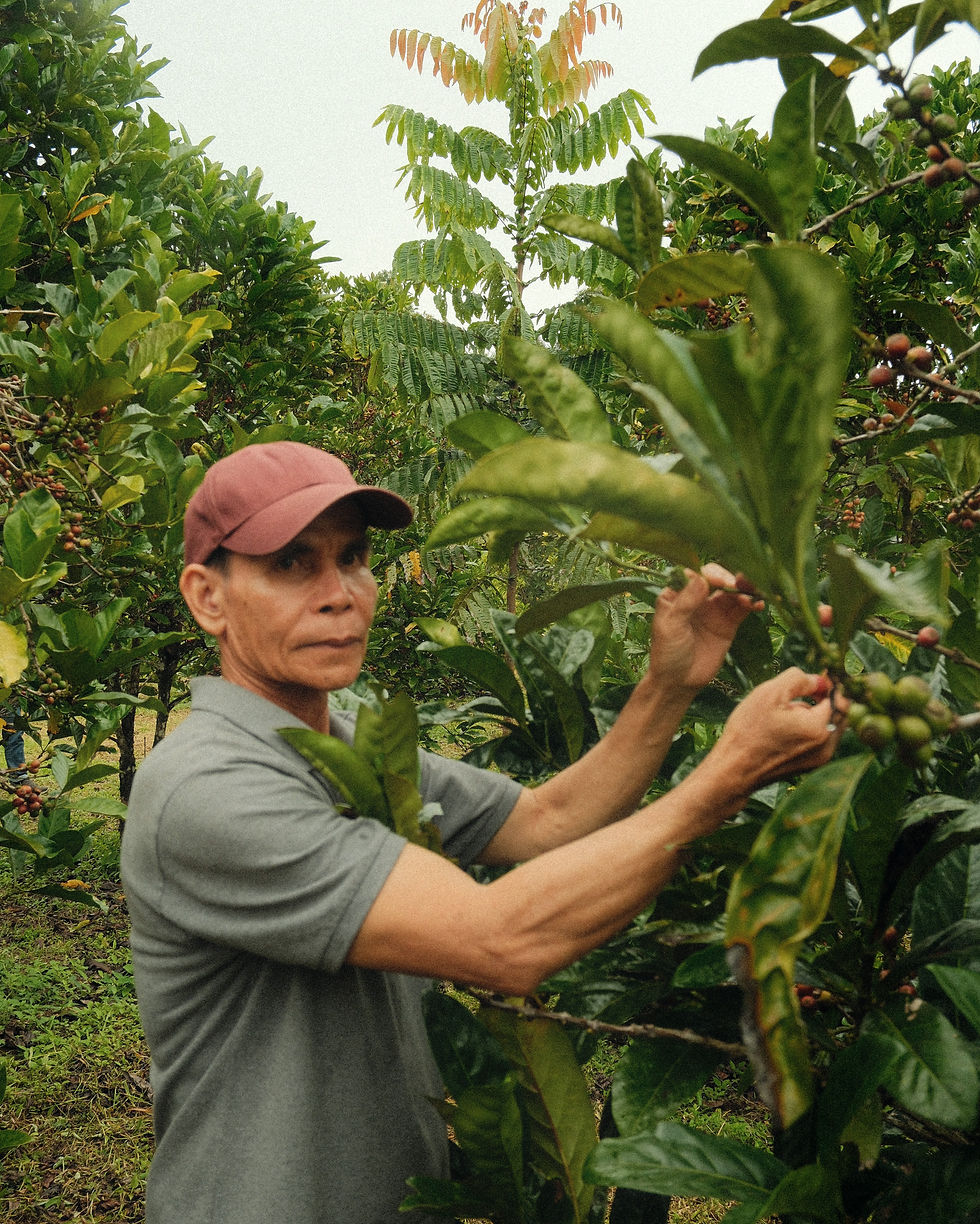
The older coffee growers we met during filming were proud of what they produced. They spoke of their crop as Sarawak’s coffee. That pride stayed with us, along with a question: who would carry their work into the next generation?
We spent close to a year researching, planning, filming and completing Sarawak Origin - Sarawak Liberica, our four-part documentary about Sarawak Liberica coffee. Along the way, we met people whose commitment to their work went far beyond what we had imagined.
The series began airing on TVS in September 2026, with broadcast sponsorship from the Ministry of Tourism, Creative Industry and Performing Arts Sarawak (MTCP). Watch the series in the official TVS Entertainment playlist.
How the coffee documentary began
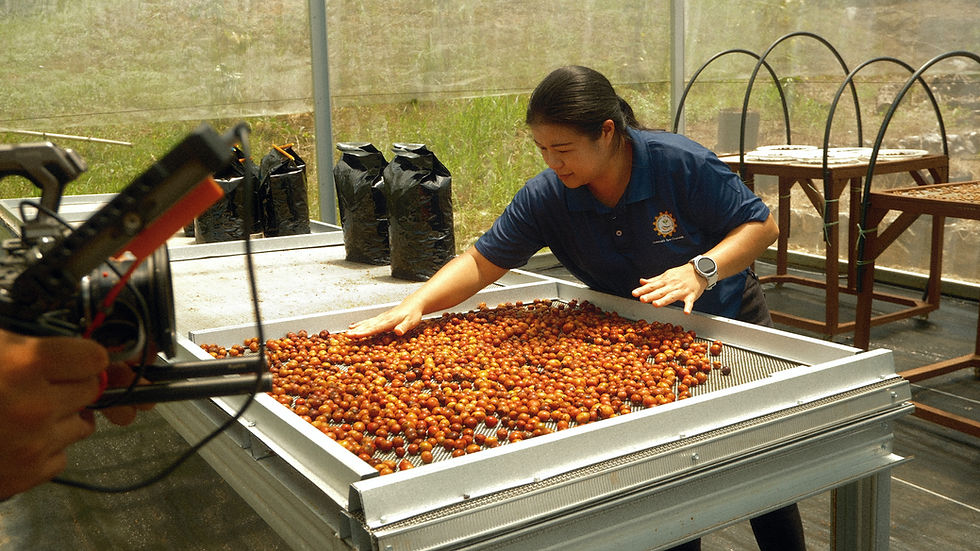
We had been developing stories through our ongoing Sarawak Origin series. The idea for this film began when we met Kenny Lee and Raven Kwok of Earthlings Coffee again. A conversation about coffee grown in Sarawak introduced us to Liberica and the possibility of following its story on film.
After TVS accepted our proposal, several opportunities came together. Preparations for the Borneo Coffee Symposium in Kuching were bringing coffee enthusiasts and researchers from different parts of the world together.
Jason Brooke was also coming to Kuching, giving us an opportunity to interview him. The timing helped turn an initial idea into a documentary we could make.
Starting with everyday coffee
Our first episode, The Forgotten Bean, begins with familiar scenes: a kopitiam, a shared table and the cup that accompanies an ordinary day. These give viewers a way into the history of coffee in Sarawak and the people who have continued growing and using it.
Jason Brooke’s historical perspective helped place the story within Sarawak’s cultivation history. Among the growers, that history continues through everyday work: tending trees, harvesting fruit and preparing coffee.
Working with the farmers in Long Banga
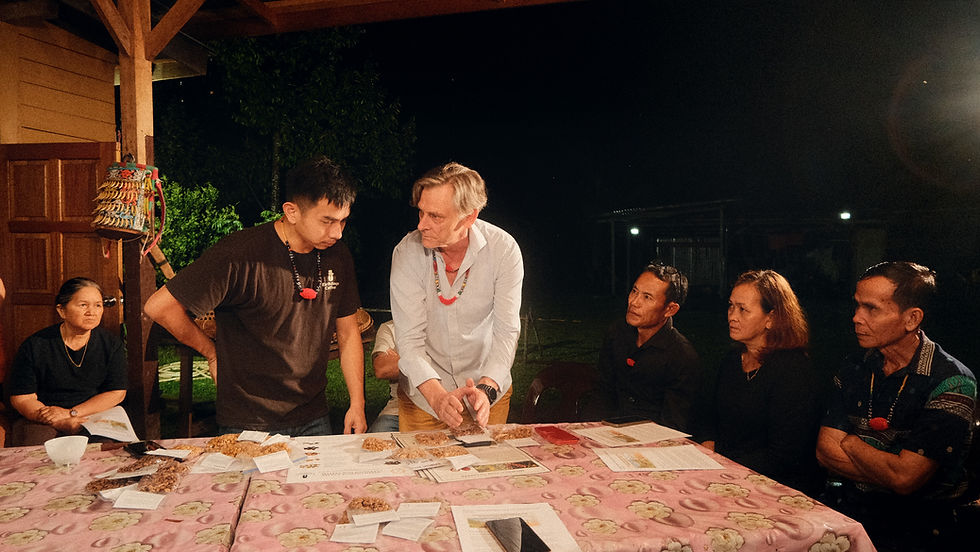
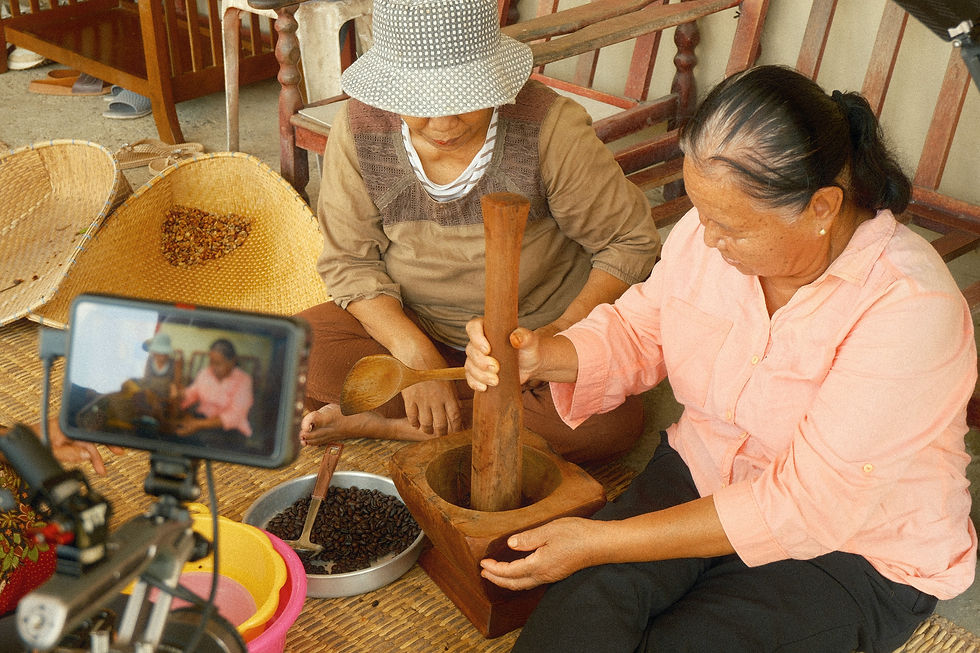
Reaching the farms in Long Banga meant a long drive followed by a journey by longboat. We were struck by the effort people made to reach remote communities and exchange ideas with farmers about growing coffee and improving production. Much of that work happens far from public attention.
Alasdair Clayre helped connect the farming community with Kenny. Their work together included choosing coffee cherries, handling a harvest, fermentation and drying. These are decisions made before coffee reaches a roaster or a cup, and they can influence its quality.
The farmers brought their own experience of the trees and the conditions they worked in. We saw their pride in what they grew alongside the commitment of those sharing knowledge with them. Both became essential to our understanding of the story.

Making room for the people and their work
Four episodes gave us room to move from everyday coffee and history to farming, international exchange, research and the uses of the tree’s flowers and fruit. Each part follows another stage of the work and the people involved.
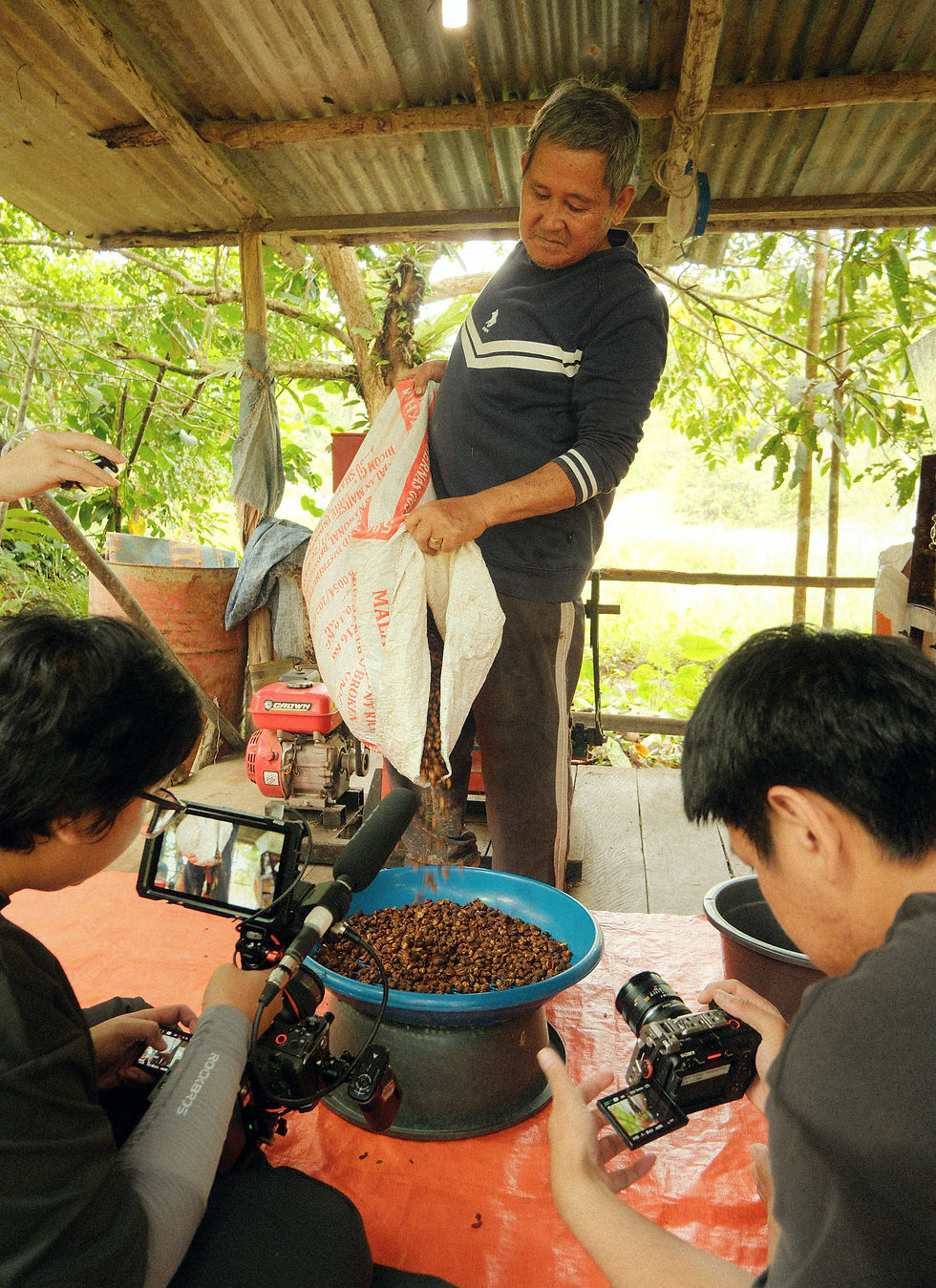
Our aim for the narration was to help viewers follow those connections in everyday language. History and research provide useful explanations; the interviews and practical work show what those explanations mean in people’s lives. The farmers’ experience remained an important part of that account.
What the research tells us about Libex
Research published in Scientific Reports on 14 May 2026 helps explain some of the coffee grown in Sarawak. By examining the plants’ genetic information, the researchers found that many of the farmed plants they studied in Sarawak had parentage from both Liberica and Excelsa, two different coffee species.
They proposed the name Coffea × libex, or Libex, for this hybrid. The name refers specifically to the Liberica–Excelsa hybrid; Liberica remains a distinct species. The study also considers how these plants could contribute to future coffee growing as the climate changes. Read the original study.
Kenny and Alasdair are among the paper’s authors. Their involvement connects the people in our documentary with the research into the coffee they had been working with.
Dr Aaron P. Davis and the team at Royal Botanic Gardens, Kew, contributed to establishing that hybrid identity. Dr Steffen Schwarz, founder of Coffee Consulate in Germany, had encouraged the collection and study of Liberica samples over many years.
Earthlings’ account of the research describes these contributions and the community connections behind the work.
The research adds to our understanding of the trees. The farmers’ experiences help us understand what it takes to keep growing them.
Who will carry the work forward
Many of the growers we met were older. Their pride in Sarawak coffee left us thinking about the younger generation: would there be people ready to continue the work?
That question concerns the knowledge of the trees, the handling of each harvest and whether coffee growing can offer a future worth choosing.
Helping farmers find buyers is an important step. It also made us think about what follows: how the coffee is prepared, how people come to know it and what other products might grow from it.
These questions connect the work on the farms with the choices made by roasters, cafés and consumers.
The final episode, Coffee Blossom, explores part of that possibility through the tree’s flowers, fruit pulp and beans, and their use in tea and dishes with local Sarawak flavours. Kenny and Raven’s work at Earthlings helped open this part of the series.
The filming is complete, but questions about the next generation and what comes after the harvest have stayed with us. They are part of what we hope viewers will think about when they watch.
The four episodes and where to watch
The TVS broadcast schedule places the series on four Sundays at 6:15pm Malaysian time (MYT):
Episode 1 — The Forgotten Bean · 27 September 2026: Everyday coffee opens a journey into history and the communities that kept growing it.
Episode 2 — From Farm To Cup · 4 October 2026: Farmers, processing methods and community relationships bring the work behind a harvest into view.
Episode 3 — Liberica on the World Stage · 11 October 2026: International exchange and research provide a wider context for Sarawak’s coffee.
Episode 4 — Coffee Blossom · 18 October 2026: Flowers, fruit and beans lead into tea and food, bringing the series back to the possibilities within the tree.
Watch Sarawak Origin - Sarawak Liberica in the official TVS Entertainment playlist. It brings the episodes together in one place.
As TVS Entertainment adds the third and fourth episodes, you can find the latest releases through the same playlist.
Acknowledgements
Our special thanks to MTCP for sponsoring the broadcast of this documentary, and to TVS Entertainment for bringing the series to audiences.
We are grateful to Dr Kenny Lee Wee Ting and Raven Kwok at Earthlings Coffee Workshop for sharing their knowledge and work with us.
Our thanks also go to Dr Steffen Schwarz and Coffee Consulate, and Dr Aaron P. Davis and the team at Royal Botanic Gardens, Kew, for their contributions to the research behind this story.
We thank Alasdair Clayre for the community connections that helped shape the documentary, and Jason Brooke for his historical perspective.
We also thank the organisers and participants of the Borneo Coffee Symposium for bringing people and ideas together around Sarawak’s coffee.
To the farmers and communities who welcomed our filming team and shared their time, experience and everyday work: thank you. Your contributions run through the series, from the trees and harvests to the conversations that helped us understand them.
We hope these four episodes encourage you to spend some time with the people behind Sarawak’s coffee.
For another of our films exploring Sarawak through people’s voices, read about Sarawak’s Untold History.
If you are developing a story about a community, a craft or a place, explore our documentary production in Sarawak or talk to our team.
Comments